What to Look for in a Non-Toxic Moka Pot
For a non-toxic moka pot, check every part that touches water or coffee and choose materials you’re comfortable using. Look for clear material details, minimal plastic in the brew path and care instructions that fit your routine.
On this page (8 sections)
- What should you check in a non-toxic moka pot?
- Is aluminum safe for a moka pot?
- How can you find a moka pot with no plastic?
- Does stainless steel mean a moka pot is non-toxic?
- Which Bialetti Moka Express size should you consider?
- What care habits help keep a moka pot in good shape?
- How do color and style affect the material choice?
- How do you choose the best non toxic moka pot for your kitchen?
The best non toxic moka pot for you is one whose water and coffee contact parts use materials you accept, with no plastic in the brew path if that is your preference. Check the boiler, funnel, filter plate, gasket and any coating details before choosing.
“Non-toxic” is not a precise material label by itself. A more useful approach is to identify which parts touch hot water or brewed coffee, then look for clear information about those materials.
What should you check in a non-toxic moka pot?
Check the boiler, funnel, filter, gasket and upper chamber because these parts contact water, grounds or brewed coffee. The handle and lid knob matter for heat safety and durability, but they usually have a different role in the brew path.
A moka pot’s basic brewing path is simple: water heats in the lower chamber, pressure moves it through ground coffee, and brewed coffee collects above. If you want a refresher, see how does a moka pot work.
Use this checklist when comparing models:
| Part | What to verify |
|---|---|
| Boiler and upper chamber | Identify the metal and check for any interior coating |
| Funnel and filter plate | Confirm the materials that touch water and coffee |
| Gasket | Check whether it is silicone, rubber or another material |
| Handle and knob | Note whether they are plastic, wood or metal |
| Cleaning instructions | Follow the maker’s guidance for washing and drying |
Ask the brand or seller when a material or coating is unclear. Avoid assuming that a metal exterior means every internal part is metal.
Is aluminum safe for a moka pot?
Aluminum is widely used in moka pots, but the word “aluminum” alone does not tell you whether a particular pot fits your preferences. Check the material, any coating information and care instructions, then decide based on your own requirements.
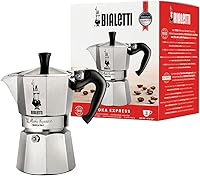
For example, the Bialetti Moka Express is made of aluminum and includes a safety valve and ergonomic handle. If origin is another factor in your choice, see moka pots made in Italy.
Its care instructions call for rinsing with water, avoiding detergents and skipping the dishwasher.
If you prefer a different body material, compare options in our best non aluminum moka pot guide. That comparison can help narrow the material choice, though you should still check the gasket and other internal parts.
How can you find a moka pot with no plastic?
To find a moka pot with no plastic, check each component and ask whether any plastic part touches hot water or brewed coffee. A metal body does not guarantee a fully plastic-free design.
Some buyers want to avoid plastic only in the brew path; others want no plastic parts anywhere, including the handle or lid knob. Decide which standard you mean before comparing products, since these are different requirements.
Bialetti lists aluminum as the material for its Moka Express models, and their listed included components include a filter and gasket. That material description does not identify every component’s composition, so confirm details if you need a fully plastic-free pot.
For a pot that suits travel or outdoor brewing, consider the practical setup too. Our best espresso makers for camping guide covers portable brewing choices.
Does stainless steel mean a moka pot is non-toxic?
Stainless steel can suit buyers who prefer to avoid an aluminum body, but it does not answer every material question by itself. Check the grade, any coatings, seals and the materials of the funnel and filter.
Moka pots can combine several materials. A stainless body may still have a gasket, handle or knob made from another material, so inspect the whole brew path rather than relying on the main material name.
Also consider your stovetop. Some moka pots need an induction-compatible base or adapter, so check the maker’s instructions before buying.
For electric-burner guidance, see using a moka pot on an electric stove.
For options, see our best moka pots for induction stoves guide.
Which Bialetti Moka Express size should you consider?
Choose a size based on how much coffee you usually brew at once, since Moka Express sizes are measured in espresso cups. The 1-cup and 3-cup versions suit smaller batches, while the 6-cup model gives you more capacity.
The Moka Express line uses aluminum, so these options are for buyers who are comfortable with that material. If your priority is avoiding aluminum, compare other materials before choosing a size.
A moka pot also makes concentrated coffee, but it does not brew at the same pressure as an espresso machine. See is a moka pot the same as an espresso machine for a clear comparison.
What care habits help keep a moka pot in good shape?
Follow the care instructions for your specific moka pot and clean it in a way that does not damage its materials. For the brewing routine, see how to use a moka pot for strong coffee.
Bialetti says to rinse the Moka Express with water after use, avoid detergents and avoid the dishwasher.
Let the pot cool before handling or taking it apart. Dry the parts fully before storage, and check the gasket and safety valve during routine cleaning.
Do not use a cleaning method just because it is common for another material or model. The maker’s directions take priority, especially if your pot has a coating or a different gasket.
How do color and style affect the material choice?
Color alone does not tell you what a moka pot is made from or what touches the coffee. Verify the material and brew-path parts separately, even when a finish or color is the main feature that catches your eye.
If you want to compare colored designs, browse our best moka pot green options and best moka pot pink options. Check each model’s material details before deciding whether it meets your requirements.
For a broader starting point, our best moka pot coffee maker guide compares moka pot options for different preferences and needs.
How do you choose the best non toxic moka pot for your kitchen?
Choose the best non toxic moka pot by matching the materials to your own requirements, then checking the parts that touch water and coffee. If you want no plastic, verify the gasket, handle and lid components as well as the boiler and filter.
Pick aluminum if you are comfortable with it and want a traditional Moka Express format. Pick another material if avoiding aluminum is your priority, and confirm that the pot works with your stovetop.
Measure the burner and check any adapter needs before buying. A moka pot that suits your material preferences and kitchen setup is the one most likely to fit your routine.