Moka Pot vs Manual Espresso Maker: Which Should You Choose? (November 2026)
Choose a moka pot for stovetop coffee with little manual effort, or a manual espresso maker for pressure brewing and a more espresso-like result. Your choice depends on the coffee you want, the equipment you have and how much work you want each cup to take.
On this page (8 sections)
- Moka pot vs manual espresso maker: how do they brew?
- Which method takes more effort?
- What kind of coffee does each method make?
- What equipment do you need?
- Which moka pot size should you choose?
- How should you choose coffee and grind?
- How do cleaning and upkeep differ?
- Which should you choose: moka pot or manual espresso maker?
Choose a moka pot for stovetop coffee with little manual effort, or a manual espresso maker for pressure brewing and a more espresso-like result. In a moka pot vs manual espresso maker comparison, the key differences are heat source, effort and the kind of coffee each method produces.
A moka pot uses heat from a stovetop to move water through ground coffee. A manual espresso maker uses hand pressure, and some models also need hot water prepared separately.
These methods can both make concentrated coffee, but they aren't interchangeable. For a quick explanation of the terms, see what a manual espresso machine is and whether a moka pot is the same as an espresso machine.
 Best for stovetop brewing
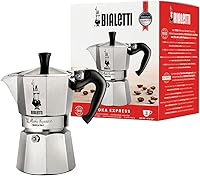
Bialetti Moka Express Iconic Italian Stovetop Espresso

Moka pot vs manual espresso maker: how do they brew?
A moka pot relies on stovetop heat, while a manual espresso maker relies on pressure you apply by hand. That difference shapes the setup, the work and the coffee in your cup.
With a moka pot, water sits in the lower chamber and ground coffee goes into the filter. Heat pushes the brewed coffee into the upper chamber; remove the pot when it starts to gurgle.
A manual espresso maker uses a hand-operated lever or piston to push hot water through coffee. For a closer look at one common design, read how a manual lever espresso machine works.
The Wacaco Minipresso GR shows how a portable manual model works: add ground coffee and hot water, release the piston and pump a few strokes. It needs no battery or electricity, but it does need hot water from elsewhere.
Which method takes more effort?
The moka pot asks you to monitor heat; the manual maker asks you to operate the pressure mechanism. Neither is fully automatic, but the work happens at different points.
For a moka pot, you fill the water chamber, add coffee without pressing it down and put the closed pot on a suitable stove. You then pay attention as it brews and turn off the heat when it starts to gurgle.
A manual espresso maker takes more direct movement during extraction. You prepare water and coffee, then pump or press a lever to push water through the grounds.
Is a moka pot easier for a daily routine?
A moka pot can suit a routine built around a stovetop and a short brewing sequence. You don't need to pump during extraction, though you do need to stay nearby and remove it from the heat at the right point.
This method may feel less convenient if you want coffee without turning on a stove or watching a pot. For practical steps with one familiar model, see how to use a Bialetti Moka Express.
Does a manual espresso maker need electricity?
A manual espresso maker doesn't need an electric pump, but it may still depend on a kettle or another way to heat water. The Minipresso GR requires boiling water, then several strokes of its piston.
That can be useful on a trip where hot water is available but there is no stovetop. If you want an overview of options, our guide to the best manual espresso maker covers the category.
What kind of coffee does each method make?
Choose the manual espresso maker when you want espresso made with hand-applied pressure; choose a moka pot for concentrated stovetop coffee. Strong flavor alone doesn't make a moka brew the same as espresso.
A moka pot makes coffee by passing heated water through ground coffee. Its output is often served in small cups, but you can pour it into a larger drink if that suits you.
A manual espresso maker extracts coffee by applying pressure through the grounds. The Minipresso GR is described as making up to 50 ml of espresso when used with hot water and ground coffee.
If you want a broader comparison with another manual brewing method, see AeroPress vs espresso machine. It can help clarify how brew methods differ before you choose a device.
What equipment do you need?
A moka pot needs a compatible stovetop; a manual maker needs a way to supply hot water and operate its mechanism. Check the heat source and the brewer's exact instructions before choosing.
The Bialetti Moka Express works on gas and electric stovetops, and on induction with a Bialetti induction adapter plate. The Primula Classic is described for gas, electric and ceramic stovetops.
A manual maker can avoid the stove at the brewing point, but it doesn't remove the need for hot water. The Minipresso GR needs boiling water, and its accessories are sold separately.
Which one suits a small kitchen?
A manual maker can be a practical choice when you lack a stove or want to brew without placing a pot on one. A moka pot is straightforward if a compatible burner is already part of your kitchen.
Think about where you will store the brewer and prepare coffee. A kettle, a safe hot-water source and room to work may matter as much as the brewer's footprint.
Which one is better for travel?
A portable manual maker is the more flexible pick when you can get hot water but can't use a stovetop. A moka pot can also be portable, but its brewing still depends on a suitable heat source.
The Minipresso GR is described as compact and lightweight, with manual operation and no battery or electricity requirement. The smaller 130 ml Bialetti Moka Express is also described as portable, but it still needs a compatible stovetop.
Before packing either one, check what your destination provides. If you plan to make coffee outdoors, confirm that the heat source is allowed and safe to use there.
Which moka pot size should you choose?
Choose a moka pot size based on how much coffee you make at once, not on mug capacity alone. Moka pot sizes are commonly described by espresso cups, so compare the stated servings with your usual routine.
The 130 ml Bialetti is a smaller option for a modest batch. The Primula Classic is described as making six demitasse servings, while the Bialetti Moka Express product here is described as a six-cup model.
Those servings are small. If you want help narrowing the size, see our guide to the best 3 cup moka pot.
How should you choose coffee and grind?
Use ground coffee that suits the brewer, and follow its instructions for filling the basket. The moka pot instructions call for adding coffee without pressing it down.
The Wacaco Minipresso GR also uses ground coffee, and its instructions describe leveling the grounds with slight pressure. Follow the steps for the specific brewer rather than assuming the same basket preparation works for both.
Grind size and dose can change how water moves through coffee. Start with the brewer's directions, then adjust one step at a time to suit your taste.
How do cleaning and upkeep differ?
Both methods need routine cleaning, but the moka pot's parts should be handled according to its care directions. Rinse the Bialetti Moka Express with water after use, and don't put it in the dishwasher or use detergent.
For the Primula Classic, the care directions say to rinse with warm water and let the parts dry before reassembling. Check the manual for your exact model, since materials and cleaning guidance can vary.
A manual espresso maker also needs attention to its basket and water path. Follow the maker's instructions for removing grounds and cleaning parts, especially before storing it for travel.
Which should you choose: moka pot or manual espresso maker?
Pick a moka pot if you have a stovetop and want a simple way to brew concentrated coffee; pick a manual espresso maker if you want hand-powered espresso and can handle the extra steps. Your available heat source is often the deciding factor.
Choose the moka pot if you want to add water and coffee, heat the pot and avoid pumping during extraction. The Bialetti and Primula options above cover smaller and larger moka pot batches.
Choose a manual espresso maker if you want to control extraction with a lever or piston, or need a portable brewer that doesn't use electricity. If you're still comparing models, our best manual espresso maker guide is a useful next step.
Frequently asked questions
Is moka pot coffee the same as espresso?
No. A moka pot uses stovetop heat to push water through coffee, while a manual espresso maker uses hand-applied pressure to extract espresso.
Moka pot coffee is concentrated and strong, but the two methods use different brewing pressure and produce different results.
Which is easier to use, a moka pot or manual espresso maker?
A moka pot is usually simpler if you have a compatible stovetop: add water and coffee, heat it, then remove it when brewing finishes. A manual espresso maker asks you to prepare hot water and operate a lever or pump, so it takes more direct effort.
Can a manual espresso maker work without electricity?
Yes. Manual espresso makers use hand pressure rather than an electric pump, though some models still need hot water from a kettle or another heat source.
The Wacaco Minipresso GR needs no battery or electricity, but you must add boiling water and pump its piston.
Should I buy a moka pot or a manual espresso maker for travel?
Choose a portable manual espresso maker if you'll have hot water but no stovetop. A moka pot can travel too, but it still needs a compatible heat source.
Check the exact model's size and the available water and heating setup before packing.
Do both methods use ground coffee?
Yes. The listed moka pots and the Wacaco Minipresso GR use ground coffee.
You still need to match the grind and dose to the brewer's instructions, since the brewing chambers and methods differ.