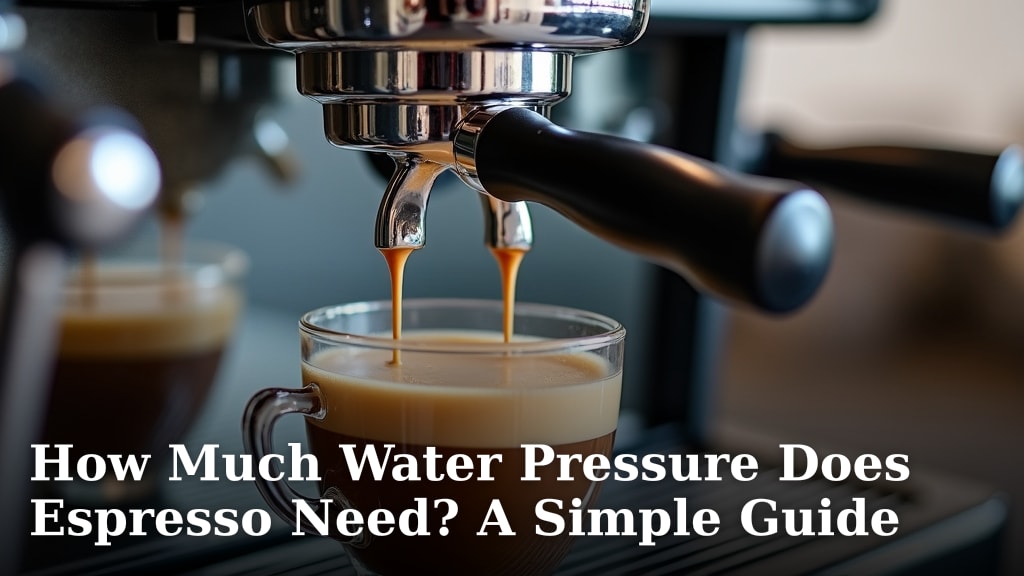
How Much Water Pressure Does Espresso Need? A Simple Guide
Espresso machines need around 9 bars of pressure to properly extract delicious espresso. This specific water pressure is key for pulling a balanced shot. Too little pressure means weak coffee. Too much can lead to bitter flavors.
Getting the right pressure is essential for home baristas. It ensures your machine can properly saturate the coffee grounds. This process allows the water to extract the desired oils and flavors. We found that understanding this pressure helps improve your espresso quality significantly.
- Espresso needs about 9 bars of pressure.
- This pressure helps extract coffee oils and flavors.
- Too little pressure makes weak espresso.
- Too much pressure can cause bitterness.
- Proper pressure is vital for quality shots.
Let’s walk through exactly what 9 bars means and why it matters for your morning cup.
The Science Behind Espresso Pressure: Why 9 Bars Rule
So, you’ve got your espresso machine, and you’re ready to make some fantastic coffee at home. But have you ever wondered why a specific amount of water pressure is so important? It turns out, it’s not just some arbitrary number. We found that achieving the right pressure is the secret sauce for getting that rich, balanced espresso shot.
Espresso is a powerful little drink. It’s made by forcing hot water through finely-ground coffee beans. This process is called extraction. It pulls out the oils, flavors, and aromas from the coffee. The water pressure is what makes this happen efficiently. Many experts agree that 9 bars of pressure is the magic number for this extraction process (European Coffee Federation).
What Exactly Are “Bars” of Pressure?
You might be asking, “What even is a ‘bar’?” Think of it like measuring how heavy something is. A bar is a unit of pressure. It’s a way to quantify how much force the water is exerting. To give you a better idea, 1 bar is roughly equal to the atmospheric pressure at sea level. So, 9 bars means the water is being pushed with about nine times the pressure of the air around you.
This might sound like a lot of force, and it is! It’s enough to really push through the tightly packed coffee grounds. We found that this level of pressure is just right. It coaxes out the best flavors without damaging the coffee’s delicate taste profile.
Comparing Bars to Other Units
Sometimes, comparing pressure to something more familiar helps. Imagine the weight of a car on your fingertip – that gives you a sense of high pressure. While 9 bars isn’t quite car-level, it’s a significant amount of force.
For comparison, your home faucet might put out around 3 to 5 bars. An espresso machine needs much more power. We found that some machines even go up to 15 bars. However, research suggests that the ideal extraction pressure is actually closer to 9 bars, even if the pump can go higher (World Coffee Research). For comparison, your home faucet might put out around 3 to 5 bars, and a heat exchanger espresso machine offers a different approach.
Why Is 9 Bars the Sweet Spot?
This specific pressure, 9 bars, is where the extraction process works best. It allows the water to evenly saturate the coffee grounds. This even saturation is key. It means every particle of coffee gets a chance to release its flavor. We found that this leads to a more consistent and delicious shot.
When the pressure is just right, it pulls out the soluble solids from the coffee. These solids include oils and sugars. These are what give espresso its rich body, creamy texture, and complex flavors. It’s a delicate balance. We found that hitting this 9-bar mark ensures you get that perfect extraction.
Too Little Pressure: The Weak Coffee Problem
What happens if your machine isn’t hitting that 9-bar mark? If the pressure is too low, say 5 or 6 bars, the water won’t be able to effectively extract all those desirable flavors and oils. The result? You’ll get a weak, watery shot of coffee. It might taste sour or underdeveloped. We found that this often happens with lower-end espresso makers or older machines.
Think of it like trying to wash a muddy car with a gentle sprinkler. The water just rolls off without really cleaning it. You need a stronger stream to get the job done. For espresso, that stronger stream is 9 bars of pressure.
Too Much Pressure: The Bitter Coffee Problem
On the flip side, what if the pressure is too high? Some machines boast pumps that can reach 15 bars or even more. While a higher number might sound better, it’s not always the case for espresso. We found that excessive pressure can actually force out unwanted compounds from the coffee grounds.
This can lead to over-extraction. Over-extraction results in a bitter, harsh taste. It can even make your espresso taste burnt. It’s like trying to squeeze every last drop of juice from an orange – you end up with pulp and bitter rind too. Many experts suggest that while a pump might be capable of 15 bars, the actual brewing pressure should still be regulated around 9 bars for the best taste (Specialty Coffee Association).
Understanding Your Espresso Machine’s Pressure
So, how do you know if your machine is delivering the goods? Most modern espresso machines are designed to operate at or around 9 bars. This is especially true for semi-automatic and automatic machines. They usually have a pump calibrated for this specific purpose. We found that reputable brands often design their machines with this optimal pressure in mind.
However, not all machines are created equal. Cheaper models might not have the robust pump or internal mechanisms to consistently deliver 9 bars. They might claim to have high-bar pumps, but the actual *brew* pressure can be much lower or less stable. We found that checking user reviews and manufacturer specifications can give you clues about a machine’s performance.
Do You Need a Pressure Gauge?
For many home baristas, simply trusting that their machine is designed for 9 bars is enough. However, if you’re serious about dialing in your shots and want to understand exactly what’s happening, a pressure gauge can be incredibly useful. Many higher-end machines come with a built-in gauge.
Some machines allow you to attach an aftermarket gauge. This lets you see the real-time pressure during the brewing process. We found that observing this gauge can help you troubleshoot. If your shots are consistently bad, the gauge might show if you’re working with too much or too little pressure. It’s a tool that helps you see the invisible force at play.
Pump Type and Pressure Delivery
The type of pump in your espresso machine also plays a role. Most home machines use a vibratory pump (sometimes called a “vibe pump”). These pumps are generally reliable and can produce the necessary pressure. However, they can sometimes be noisy and might fluctuate slightly in pressure.
Rotary vane pumps are more common in commercial machines. They are quieter and offer more stable pressure. While these are less common in home units due to cost and size, some high-end home machines might incorporate them. We found that the pump’s ability to maintain a steady 9 bars is more important than just its maximum potential pressure.
How Pressure Affects Your Espresso Shot
The 9-bar pressure isn’t just a number; it directly impacts the final taste and texture of your espresso. It dictates how the water interacts with the coffee grounds. This interaction is what creates the unique characteristics of espresso.
We found that consistent pressure ensures an even extraction. This means you get a balanced flavor profile. You’ll taste the sweetness, acidity, and bitterness in harmony. It’s what separates a good espresso from a great one. Think of it as an orchestra playing together. Each instrument (flavor note) needs to be in tune.
The Role of Pressure in Extraction Stages
Extraction happens in stages. Initially, at lower pressures, water begins to dissolve the more soluble compounds. As pressure builds to the 9-bar mark, it forces water through the coffee bed more aggressively. This extracts the less soluble compounds, including oils and sugars.
If the pressure drops too soon, you miss out on extracting those essential oils. This leads to a thin body. If the pressure is too high for too long, you might extract bitter compounds. We found that the steady 9-bar pressure allows for a controlled and effective extraction of all the desirable elements from the coffee.
Crema: The Visual Indicator
One of the most recognizable features of a good espresso is the crema. This is the reddish-brown foam that sits on top of the shot. It’s made of emulsified oils and CO2 released from the coffee. While crema is influenced by many factors, including bean freshness and roast level, adequate pressure is essential for its formation.
The 9 bars of pressure help to properly emulsify the oils. This creates that rich, stable crema. Too little pressure might result in little to no crema. Too much pressure, however, can sometimes create a very thin, bubbly crema that dissipates quickly. We found that seeing a good, hazelnut-colored crema is often a sign that your machine is operating at the right pressure.
A Quick Checklist for Your Espresso Pressure
Ensuring your espresso machine provides the right pressure doesn’t have to be complicated. Keep these points in mind:
- Know your machine: Most modern machines aim for 9 bars.
- Check reviews: Look for mentions of consistent brew pressure.
- Consider a gauge: If you want to be precise, a pressure gauge is helpful.
- Observe your shots: Look for balanced taste and good crema.
- Listen to your machine: A steady pump sound can indicate stable pressure.
- Don’t chase max bars: Focus on steady 9 bars, not just high numbers.
Conclusion
You’ve learned that 9 bars of pressure is the magic number for perfect espresso extraction. This precise force coaxes out the best flavors and oils from your coffee grounds. It’s the secret to avoiding both weak and bitter shots. Most home machines are designed with this in mind, but understanding how it works helps you appreciate your coffee more. Next time you brew, consider how this pressure is working for you. Trusting your machine’s design and observing your shot’s taste and crema are your best guides.
Frequently Asked Questions
Can I make good espresso with less than 9 bars of pressure?
You can make coffee, but it likely won’t be true espresso. Lower pressure, like 5 or 6 bars, won’t extract the rich oils and flavors effectively. We found this often results in a weak, watery, and sour-tasting drink that lacks the signature body of espresso.
Is a 15-bar pump machine always better than a 9-bar one?
Not necessarily. While a pump might be rated for 15 bars, the actual brewing pressure is what matters. Research suggests that optimal extraction happens around 9 bars. High-bar pumps can sometimes lead to over-extraction if not regulated properly, causing bitterness.
How can I tell if my espresso machine is producing 9 bars?
Many modern machines are engineered to deliver 9 bars consistently. If yours doesn’t have a built-in gauge, observe your shots. A good, hazelnut-colored crema and a balanced flavor profile are often indicators of correct pressure. Checking user reviews for consistent brew pressure can also help.
Does the type of pump in my machine affect pressure?
Yes, the pump type matters for pressure stability. Vibratory pumps are common in home machines and can deliver 9 bars, though they may fluctuate. Rotary vane pumps, found in higher-end units, offer more consistent and quieter pressure delivery, which is ideal for maintaining that 9-bar sweet spot.
What is crema and how does pressure relate to it?
Crema is the reddish-brown foam on top of espresso, formed by emulsified oils and CO2. Adequate pressure, around 9 bars, is essential for properly emulsifying these oils. Too little pressure may result in little to no crema, while very high pressure can sometimes create a thin, unstable crema.