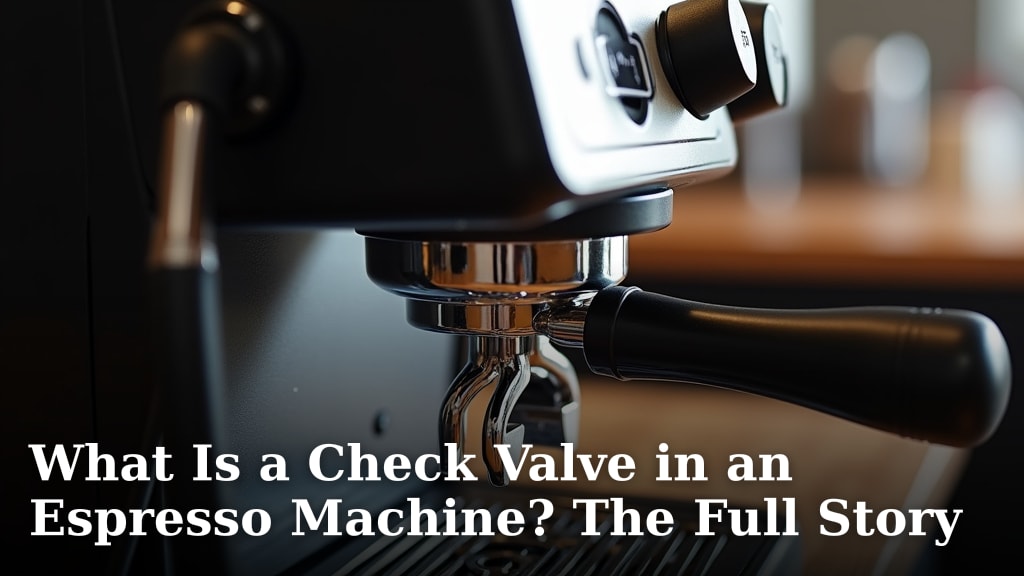
What Is a Check Valve in an Espresso Machine? The Full Story
A check valve in your espresso machine is a simple one-way gate. It stops water from flowing backward. This helps maintain consistent pressure for great espresso shots. You might not see it, but it’s vital for machine function.
Think of it as a tiny hero protecting your brew. It ensures that once water moves forward, it can’t reverse. This is key for the brewing process and protects your machine’s pump. Many espresso machines use this smart little component.
- A check valve is a one-way door for water.
- It keeps water from flowing backward.
- This maintains pump pressure and shot quality.
- It’s a small but important part of your machine.
Let’s get into what this little part does and why you should care about it. We’ll break down its role in your espresso machine’s daily grind. Our guide to the single boiler espresso machine explains its role in brewing.
Understanding the Check Valve in Your Espresso Machine
So, what exactly is this little check valve we’re talking about? It’s a small but mighty component. It acts like a one-way street for water inside your espresso machine. Its main job is to ensure water flows in only one direction.
This might seem simple, but it’s incredibly important. Without it, water could flow back into places it shouldn’t. This could cause all sorts of problems for your machine. Think of it as a bouncer at a club. It lets the right people (water) in, but stops unwanted guests (backflow) from entering.
How Does a Check Valve Work?
A check valve uses basic physics to do its job. Most check valves in espresso machines are what we call “spring-loaded” or “ball-type.” They have a small ball or a spring-loaded plunger inside.
The Mechanics of Flow Control
When water pressure from the pump pushes forward, it opens a passage. The ball or plunger is moved out of the way. This allows water to flow through to the group head and your coffee grounds. It’s a pretty straightforward process. The pressure of the water itself is what makes it work.
Preventing the Reverse Flow
Now, what happens if the pressure tries to go backward? Maybe the pump stops, or there’s a sudden drop in pressure. In this case, the ball or plunger is pushed back into its seat. This seals the passage. It effectively blocks any water from flowing backward. This prevents water from going back towards the pump or the water reservoir.
This simple mechanism is key to how your espresso machine builds and maintains pressure. It’s like a tiny, silent guardian.
Why Is a Check Valve So Important for Your Espresso?
You might be wondering why this small part gets so much attention. The answer lies in the delicate science of making espresso. Espresso requires high and consistent pressure to extract the best flavors from coffee grounds. A check valve plays a direct role in achieving this.
Maintaining Pump Pressure
Your espresso machine’s pump is designed to push water at high pressure. If water could flow back, the pump would constantly lose this built-up pressure. Imagine trying to push a swing when someone is pulling it back at the same time. You wouldn’t get much height! The check valve stops this backward pull.
By preventing backflow, the check valve ensures that the pressure created by the pump is directed forward. This allows your machine to reach and maintain the optimal pressure needed for brewing. Many brewing guides suggest around 9 bars of pressure is ideal for espresso (National Coffee Association).
Protecting the Pump Itself
Beyond just brewing, the check valve also serves a protective function. Espresso machine pumps, especially vibratory pumps, can be sensitive. If hot water or steam were to flow backward into the pump, it could cause damage. This is known as “pump hammer” or “water hammer” in some systems.
The check valve acts as a barrier. It shields the pump from these damaging forces. This helps extend the lifespan of your machine’s components. A healthy pump means more great espresso shots for you over time.
Ensuring Consistent Shot Quality
For a truly delicious shot of espresso, consistency is key. You want the same great taste every time you brew. The check valve contributes to this by ensuring steady pressure. When pressure is stable, the water extracts the coffee solubles evenly.
This even extraction leads to balanced flavors. You avoid under-extraction (sourness) or over-extraction (bitterness). The check valve is a silent partner in your pursuit of the perfect espresso. It’s a small part of the chain, but a vital one.
Where Do You Find Check Valves in an Espresso Machine?
These little valves aren’t usually in plain sight. They are typically tucked away inside the machine’s plumbing. You’ll often find them in a few key locations, depending on the machine’s design.
Near the Pump
One of the most common places is right after the water pump. This is where the pump is generating the highest pressure. Placing a check valve here ensures that all that hard work stays directed forward. It’s the first line of defense against backflow.
Between Components
You might also find check valves between different parts of the water circuit. For example, there could be one before the brew group or near the steam boiler. These valves help manage the flow of water and steam separately. This is especially true in machines with multiple heating elements or circuits.
Inside Portafilter Spouts (Less Common)
On some older or simpler machines, you might find a very small check valve integrated into the portafilter spout. This is less common in modern, higher-end machines. Its purpose would be to prevent drips after you remove the portafilter. It’s a less critical location for overall machine function but still serves a purpose.
Common Problems and How Check Valves Might Be Involved
When your espresso machine isn’t working quite right, a faulty check valve can sometimes be the culprit. It’s not the most common issue, but it’s worth knowing about.
Weak or Inconsistent Pressure
If you notice your espresso shots are running too fast or lack crema, it could be a pressure issue. A check valve that isn’t sealing properly won’t hold pressure effectively. This means water might be seeping back, reducing the force applied to the coffee.
Water Leaking Backwards
Sometimes, you might hear odd noises from the pump or notice water seeming to flow the wrong way. This is a strong indicator that a check valve might be stuck open or not sealing. You might even see water backing up into the water tank or drip tray when the machine is off.
Pump Running Constantly
If a check valve is blocked or faulty, the pump might have to work much harder to maintain pressure. In some cases, this can cause the pump to run for longer periods than it should. This can be a sign of a stressed pump, potentially due to a failing check valve.
Can You Fix or Replace a Check Valve?
The good news is that yes, check valves are often replaceable parts. However, it’s not always a simple DIY fix for everyone.
Difficulty of Replacement
Check valves are usually small brass or plastic fittings. They are integrated into the machine’s plumbing. Replacing one often involves disassembling parts of your espresso machine. You’ll need to access the internal water lines.
This can be daunting if you’re not comfortable with electronics or plumbing. It’s important to turn off and unplug your machine before attempting any internal work. You’ll also need the correct replacement part for your specific machine model.
When to Call a Professional
If you’re unsure about opening up your espresso machine, it’s best to seek professional help. A qualified espresso machine technician can diagnose the problem. They can also replace the check valve for you. This ensures the repair is done correctly and safely. It might cost a bit more upfront, but it can save you from causing further damage.
A Quick Checklist for Your Check Valve’s Health
While you can’t usually see your check valve, you can look for symptoms. Here’s a quick way to assess if yours might be having issues:
- Is your espresso pressure lower than usual?
- Are your shots pulling much faster than they used to?
- Do you hear strange gurgling or backflow noises from the pump?
- Is there water leaking into the drip tray when the machine is off?
- Has your espresso shot quality significantly decreased?
- Does the pump seem to be running much longer than normal?
If you answered yes to several of these, it might be time to have your machine checked. A functioning check valve is essential for great espresso.
Conclusion
You’ve learned that a check valve is a tiny but essential guardian inside your espresso machine. It ensures water flows in the right direction, protecting your pump and guaranteeing consistent pressure for your daily espresso. Without this one-way gate, your machine wouldn’t brew effectively, and its lifespan could be shortened.
If you suspect a problem, a quick check of common symptoms like weak pressure or unusual noises is a good first step. Remember, a healthy check valve is key to delicious, reliable espresso. If you’re unsure about repairs, don’t hesitate to reach out to a professional to keep your machine running perfectly.
Frequently Asked Questions
What happens if my espresso machine’s check valve fails?
If a check valve fails, you might notice your espresso machine struggling to build pressure. Your shots might pull too quickly, and the crema could be thin or nonexistent. In some cases, you might hear strange noises from the pump, indicating it’s working harder than it should.
Can I just bypass the check valve if it’s broken?
While technically possible on some machines, bypassing a check valve is generally not recommended. The valve is there to protect the pump and maintain necessary brewing pressure. Removing it could lead to pump damage and inconsistent brewing results, ultimately costing you more in repairs.
How often do check valves need to be replaced?
Check valves are typically quite durable and can last for many years. Replacement is usually only needed if you experience specific symptoms of failure, such as persistent pressure loss or backflow. Regular maintenance and cleaning of your espresso machine can help prolong its life.
Are all espresso machine check valves the same?
No, check valves can vary. They come in different sizes, materials (like brass or plastic), and designs, such as ball-type or spring-loaded. The specific type used depends on the espresso machine’s manufacturer and model design. It’s important to use the correct replacement part for your machine.
Can hard water damage a check valve?
Yes, hard water can contribute to issues with check valves. Mineral buildup (scale) can cause the moving parts inside the valve, like the ball or plunger, to stick. This can prevent the valve from sealing properly or opening freely, leading to performance problems.