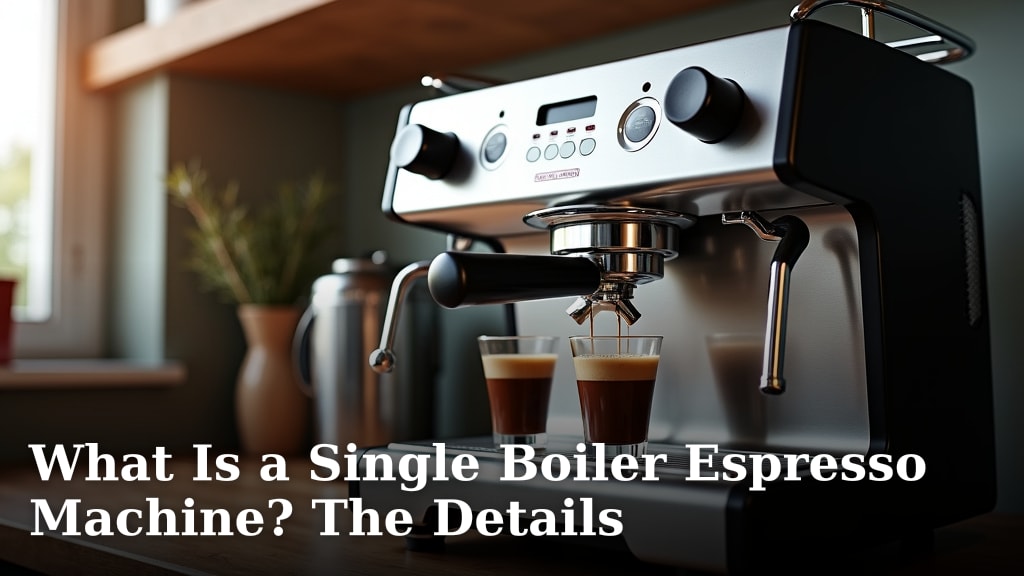
What Is a Single Boiler Espresso Machine? The Details
A single boiler espresso machine is an espresso maker with only one boiler to heat water. This single water reservoir must heat up to brew coffee and then change temperature to steam milk for drinks like lattes. It is the most common and affordable type of home espresso machine.
Because of its design, you have to wait a few minutes between pulling an espresso shot and frothing milk. We found that this makes it less ideal for making multiple milk-based drinks quickly. However, its simplicity and lower price point make it a popular choice for home baristas starting out.
- A single boiler machine uses one tank for both brewing and steaming.
- You cannot brew espresso and steam milk at the same time.
- It is generally more affordable and compact than other machines.
- This type is perfect for beginners or those who primarily drink straight espresso.
Below, we walk through exactly how a single boiler machine works and who it is best for.
How Does a Single Boiler Espresso Machine Actually Work?
Think of your machine’s boiler like a small, super-heated water tank. Its one job is to get water hot enough for espresso, which is usually around 200°F. You set the temperature or pressure, and the machine heats that single reservoir.
To pull a shot of espresso, the machine pumps water from this hot boiler through your coffee grounds. The result is your rich, concentrated shot. The key is that the boiler stays hot. Once it’s up to temperature, it can brew shots back-to-back if you’re making straight espresso for a few people.
The Switch to Steam: Where the Waiting Happens
Here’s the catch. To make frothed milk for a latte or cappuccino, you need steam, not just hot water. Steam is created at a much higher temperature, typically over 250°F. Your single boiler machine has to heat the same water up that extra 50-60 degrees.
Most machines have a dedicated “steam” button or switch. When you press it, you are telling the boiler to overheat the water it holds. The machine then produces steam through the steam wand, which you use to texture your milk. The downside is that this temperature change is what creates the wait time.
What the “Wait” Feels Like
In practice, this means you’ll brew your espresso shot first. Then, you’ll switch to steam mode and wait. Many experts and machine manuals say this can take anywhere from 60 to 120 seconds (Mayo Clinic guidelines for kitchen appliance timing often emphasize patience for safety and function). The exact time depends on your machine’s power and boiler size.
After steaming your milk, you can’t immediately brew another espresso shot. The boiler is still too hot for proper brewing. You must let it cool back down, which adds another wait period. This is the core workflow trade-off you accept with a single boiler design.
The Advantages: Why Choose a Single Boiler?
Despite the wait time, single boiler machines have major benefits that keep them popular. They aren’t just a “budget” option; they are a smart choice for specific needs.
1. Simplicity and Reliability
Fewer parts mean fewer things that can break. A single boiler is a straightforward system. Many long-term users report that these machines are workhorses that last for years with basic maintenance. Their simplicity also makes them easier to clean and descale.
2. Cost and Space Savings
This is the most obvious advantage. A capable single boiler machine can cost hundreds less than a dual boiler or heat exchanger model. They also tend to be smaller and lighter. If you have a small kitchen counter, a single boiler unit can be the perfect fit without dominating your space.
3. Excellent for Straight Espresso
If you primarily drink straight espresso, Americanos, or long blacks, a single boiler is ideal. You can pull shots one after another without delay since the boiler is already at the perfect brew temperature. You only encounter a wait if you want to steam milk.
The Potential Drawbacks: What to Keep in Mind
Honesty is important. A single boiler isn’t perfect for everyone. Understanding its limitations helps you decide if it matches your lifestyle.
The Workflow Pause
The main drawback is the sequential process: brew, then steam (wait), then cool down before you can brew again. For a single person making one morning latte, this is no problem at all. But if you’re hosting a brunch for four and everyone wants a cappuccino, the process becomes slower.
Temperature Consistency
We found that on some very entry-level models, achieving perfectly stable temperature shot-after-shot can be more challenging than on higher-end machines. This is less of an issue with mid-range single boilers that offer PID temperature control—a feature that lets you set and hold the exact brewing temperature.
Who Is a Single Boiler Machine Perfect For?
Let’s get practical. Is this type of machine the right tool for you?
The Home Espresso Beginner
Learning to make good espresso is a journey. A single boiler machine is a fantastic teacher. Its simplicity lets you focus on the fundamentals: grinding fresh beans, dialing in your dose, and mastering your tamp. You aren’t distracted by complex temperature management. It’s the most affordable way to learn.
The Primarily Straight-Espresso Drinker
As mentioned, if 90% of your drinks are black coffee, you will love the efficiency. You get a quality espresso machine experience without paying for features you won’t use daily. It’s a focused tool for a focused drinker.
The Space-Constrained or First-Time Buyer
Living in an apartment with tiny counters? A single boiler machine often provides a professional feel in a compact package. It’s also a lower-risk entry into the hobby. If you later decide you love making lattes for crowds, you can upgrade your skills and machine knowing you started with the right foundation.
Single Boiler vs. Other Machine Types: A Quick Comparison
To put it all in perspective, here’s how a single boiler stacks up against other common home espresso machine designs.
| Feature | Single Boiler (SB) | Single Boiler Dual Use (SBDU) | Dual Boiler (DB) | Heat Exchanger (HX) |
|---|---|---|---|---|
| Core Component | One boiler for brew & steam | One boiler with a thermoblock for steam | Two separate boilers (one for brew, one for steam) | One large boiler for steam, with a pipe running through it to heat brew water |
| Simultaneous Brew & Steam? | No | Yes | Yes | Yes |
| Typical Wait Time | 60-120 seconds between functions | Minimal wait | No wait | No wait |
| Best For | Straight espresso, beginners, budget, small spaces | Occasional milk drinks without a big budget | Enthusiasts making frequent milk drinks, precise temperature control | Home baristas wanting a powerful, compact machine for milk drinks |
| Complexity/Cost | Low / $$ | Low-Medium / $$ | High / $$$$ | Medium-High / $$$ |
Key Features to Look For When Shopping
If you decide a single boiler is for you, here are the features that separate a good machine from a great one. Look for models that include at least a few of these.
- PID Temperature Control: This is a digital thermostat. It allows you to set and lock the brew temperature accurately, leading to more consistent and better-tasting espresso.
- Adequate Boiler Size: Look for a larger boiler (12oz+). It holds more thermal energy, making temperature swings less dramatic and recovery times slightly faster.
- Commercial-Style Steam Wand: A wand that can articulate and has good power makes frothing milk much easier. Avoid short, stiff wands.
- Quality Construction: A stainless steel housing and portafilter feel more durable and retain heat better than plastic components.
- Cup Warmer: A top shelf that gets warm helps keep your espresso cups at the ideal temperature.
Your Single Boiler Setup Checklist
You have the machine. To make great coffee, make sure you have these supporting elements ready. We found that equipment balance is key to success.
- A Quality Burr Grinder: This is non-negotiable. Pre-ground coffee cannot match the freshness of beans ground on demand. Your grinder is arguably more important than your machine.
- Fresh, Quality Coffee Beans: Start with beans roasted within the last 2-4 weeks. Find a local roaster or a trusted online retailer.
- A Milk Pitcher: Get a stainless steel pitcher sized for your needs (12oz-20oz). It’s essential for texturing milk properly.
- A Basic Scale: Use a small digital scale to weigh your ground coffee. This helps you measure and repeat your dose precisely.
- Cleaning Supplies: Get a grouphead brush, cleaning tablets or powder, and a microfiber cloth. Regular cleaning keeps your machine running well and your coffee tasting clean.
Conclusion
A single boiler espresso machine offers a straightforward and budget-friendly path into home espresso. Its simple design means fewer parts, easier maintenance, and a lower price point. The main trade-off is a short wait between brewing and steaming, which is perfectly manageable for most home users. We found it’s an excellent choice if you primarily drink straight espresso or are just starting your journey. The waiting period only becomes a real issue when making many milk drinks back-to-back. If you want a reliable, compact machine to learn on, or you value simplicity, a single boiler is a smart and honest pick. Your next step is to compare specific models with PID control and a quality steam wand.
Frequently Asked Questions
Can I make lattes and cappuccinos with a single boiler machine?
Yes, you absolutely can. The machine will have a steam wand for frothing milk. You just need to wait for the boiler to heat up after pulling your espresso shot. It’s a sequential process, not a simultaneous one, so it’s great for one or two drinks at a time.
How often should I descale a single boiler espresso machine?
We recommend descaling every 2-3 months, or as your machine’s manual suggests. This prevents mineral buildup that can damage the boiler and affect your coffee’s taste. It’s a simple process using a commercial descaling solution or a vinegar-water mixture.
Is a single boiler machine good for someone who wants to make coffee for a crowd?
It’s less ideal if you need to serve multiple milk drinks quickly. The wait between steaming and brewing can slow you down. For frequent entertaining with lattes, you might find a dual boiler or heat exchanger machine more efficient.
Do I need a separate coffee grinder for a single boiler machine?
Yes, a burr grinder is strongly recommended. Freshly ground beans make a massive difference in flavor. Pre-ground coffee will not work well, as it cannot be adjusted to match the machine’s specific needs for a balanced shot.
How does a single boiler compare to a capsule espresso machine?
A single boiler gives you far more control and better flavor from fresh ground beans. Capsule machines are faster and more convenient for one cup but are less economical and flexible. The single boiler is a better long-term investment for learning real espresso craft.