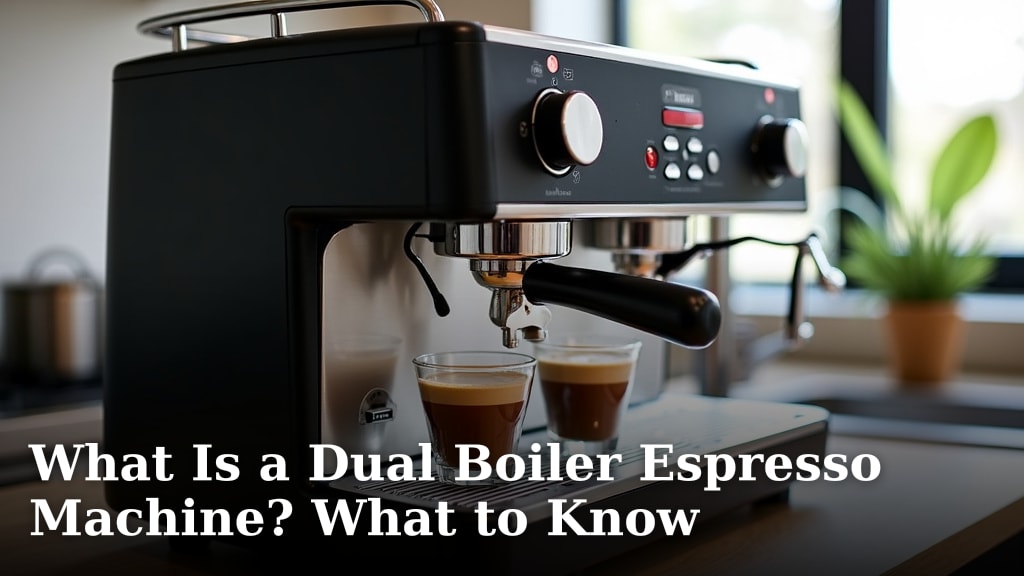
What Is a Dual Boiler Espresso Machine? What to Know
A dual boiler espresso machine is a type of espresso maker that has two separate boilers — one dedicated to brewing coffee and one for steaming milk. This design lets you do both tasks at the same time, without waiting for the machine to heat up or cool down.
For many home baristas, this is the key to making consistent, café-quality drinks. We found that the separate temperature controls mean your espresso shot is pulled at the perfect heat, while your milk is steamed at its own ideal temperature. It’s a solution for anyone tired of the single-boiler struggle.
- What it is: An espresso machine with two boilers for simultaneous brewing and steaming.
- Key benefit: Offers precise temperature control and no wait time between steps.
- Best for: Making milk-based drinks like lattes and cappuccinos quickly.
- Main consideration: Typically larger and more expensive than single-boiler models.
- Who loves it: Home baristas who want pro features and make multiple drinks in a row.
Below, we’ll walk through everything you need to know about dual boiler espresso machines, from how they work to who should buy one.
How a Dual Boiler System Actually Works
A dual boiler espresso machine uses two independent water tanks and heating elements. Think of it like having two separate kettles. One is always holding water at the perfect temperature for brewing espresso, usually around 200°F. The other is kept hotter, often above 250°F, for producing steam to froth milk.
Because they work independently, you don’t have to wait. You can pull your espresso shot and steam your milk pitcher at the same time. This eliminates the frustrating temperature surfing or cooldown periods you get with a single-boiler machine. We found that this simultaneous operation is the biggest reason home baristas upgrade.
The Key Components Inside
Beyond the boilers themselves, a good machine has a few other important parts working together.
- DualPID Controllers: These are the brains. A PID (Proportional-Integral-Derivative) controller is a fancy thermostat that keeps the water temperature incredibly stable, often within 1°F. A dual boiler machine has one for each boiler.
- Pumps and Valves: High-quality machines often use a robust pump to push water from the brew boiler through the coffee puck. Separate valves may control steam flow.
- Insulation: To keep each boiler at its set temperature without wasting energy, good machines insulate the boilers from each other.
Single vs. Dual vs. Heat Exchanger
You’ll often see these three types compared. Here’s a simple breakdown of how they differ.
| Feature | Single Boiler | Heat Exchanger | Dual Boiler |
|---|---|---|---|
| Core Idea | One boiler switches between brew and steam temps. | One boiler for steam, with a tube (heat exchanger) heating brew water on demand. | Two dedicated boilers for each task. |
| Simultaneous Use | No. Must wait between brewing and steaming. | Yes, but temperature can be less stable. | Yes, with independent temperature control. |
| Temperature Control | Basic, requires waiting for changes. | Good, but can be affected by ambient temp and humidity. | Excellent and precise due to separate PID controls. |
| Best For | Black coffee lovers on a budget. | Enthusiasts who want better performance than single-boiler. | Latte/cappuccino lovers wanting consistency and speed. |
| Typical Cost | $ | $$ | $$$ |
Many experts in the specialty coffee community, like those at the Specialty Coffee Association, emphasize that temperature stability is critical for balanced extraction and flavor. A dual boiler system excels here.
The Real Benefits of Having Two Boilers
Why pay more for this technology? The advantages are practical and directly affect your daily coffee ritual.
Serious Temperature Stability
The biggest win is keeping your brew temperature rock-steady. Even small fluctuations can make your espresso taste sour or bitter. The dedicated PID on the brew boiler ensures every shot is pulled at your set temperature, cup after cup. Research published in the journal Food Control has linked precise temperature control to more consistent chemical profiles in brewed coffee.
No More Waiting Around
Picture this: You’ve just pulled a shot for your latte. With a single boiler, you now have to flip a switch and wait 30-60 seconds for the machine to heat up to steam temperature. Your espresso gets cold. With a dual boiler, you can start steaming your milk the second your shot is done. Your drink stays hot, and your process is twice as fast. This is a game-changer on busy mornings.
Greater Workflow and Control
Having separate controls lets you fine-tune each part of the process. You can set your brew temp to 198°F for a medium roast and your steam temp to 250°F for dry, powerful steam. This level of control allows you to experiment and dial in your perfect recipe for different beans. It puts you in the driver’s seat of your coffee experience.
Features to Look for in a Dual Boiler Machine
Not all dual boiler machines are built the same. Here are key features that separate the good from the great.
Independent Temperature Control (PIDs)
Always check for this. A machine with dual PID controllers allows you to adjust the brew and steam boiler temperatures separately via the display or an app. Some cheaper models might have two boilers but only one control, which limits your ability to fine-tune. You want the independence for true precision.
Boiler Material and Size
Boilers are usually made from stainless steel, copper, or brass. Each conducts heat differently. Stainless steel is durable and common. Copper and brass heat up faster and maintain temperature well but can be more expensive. The size (measured in liters) matters too; a larger brew boiler can help maintain temperature during back-to-back shots, which is great if you’re making drinks for a crowd.
Pump Type and Build Quality
The pump is the heart of your machine. A quiet, durable pump will make your mornings more pleasant. Look for machines that mention a quality vibratory pump or, for quieter operation and smoother flow, a rotary pump. The overall build—think metal chassis versus plastic parts—will tell you how long your machine might last. A solid, weighty machine often indicates better internal components.
Steam Pressure and Wand Design
You want strong, dry steam for making velvety microfoam. The steam boiler’s power determines this. Also, look at the steam wand. A commercial-style wand that articulates easily is much easier to use than a short, stiff one. Some wands have multiple tip holes for different frothing styles.
Who Should (and Shouldn’t) Get a Dual Boiler
This machine type is fantastic, but it’s not for everyone. Let’s be honest about who benefits most.
This Is a Great Fit If You…
- Primarily drink milk-based beverages like lattes, cappuccinos, or flat whites.
- Make more than one or two drinks in a row, especially for family or guests.
- Value temperature precision and want to experiment with different coffee beans and recipes.
- Are willing to invest in a higher-quality, more capable machine that may last for years.
You Might Want to Consider a Different Type If You…
- Only ever drink straight espresso or Americanos (no milk). A single-boiler or heat exchanger might save you money.
- Are on a strict budget. Dual boiler machines are a premium category. You can get excellent coffee from simpler machines.
- Have very limited counter space. These machines are often larger and heavier than their single-boiler counterparts.
Making the Most of Your Machine
If you get a dual boiler, a few habits will ensure you love it for years to come.
Regular maintenance is key. Always use filtered water to prevent scale buildup, which is the number one enemy of any espresso machine. Follow the manufacturer’s guidelines for descaling. Before you brew, make sure you’ve allowed enough time for both boilers to reach their set temperatures—often indicated by a light or display reading. Finally, learn to steam milk properly. With two boilers, you can practice your technique without rushing.
Your Dual Boiler Checklist
Before you click “buy,” run through this simple checklist to make sure you’re choosing the right machine for your needs.
- Dual PID Control Confirmed: Can you adjust brew and steam temperatures independently?
- Build Quality Feels Solid: Is the body mostly metal, not plastic?
- Boiler Material & Size Noted: Do you understand what you’re getting (stainless, copper, liter capacity)?
- Steam Power & Wand Reviewed: Does it have a powerful steam wand that looks easy to maneuver?
- Capacity Matches Your Habits: Will the boiler size handle your typical drink volume (single cups vs. back-to-back hosting)?
- It Fits Your Space and Budget: Measure your counter and confirm the price aligns with your comfort level.
Conclusion
A dual boiler espresso machine is a serious upgrade for home baristas focused on milk-based drinks. It delivers the temperature stability and simultaneous operation needed for café-quality lattes and cappuccinos. This makes your routine faster and your results more consistent. The trade-off is a larger size and a higher price tag. If you’ve ever felt frustrated waiting for your single-boiler machine to heat up, this is the solution. Your best next step is to use our checklist to compare models. Make sure the features, size, and price align with your specific coffee habits and kitchen space.Frequently Asked Questions
How often do I need to descale a dual boiler espresso machine?
Descaling frequency depends on your water hardness and usage. As a general rule, you should descale every 2-3 months. Always use the manufacturer’s recommended descaling solution and follow their specific instructions to protect your machine’s boilers.
Are dual boiler machines more noisy than single boiler models?
Noise level is more about the pump type than the boiler setup. A machine with a rotary pump will be quieter than one with a vibratory pump. However, two boilers operating independently do not create extra noise. Check product reviews for notes on operational sound.
Can I leave my dual boiler espresso machine on all day?
Many dual boiler machines are designed for “all-day” use, which is great for entertaining. However, leaving it on constantly will use more electricity. It’s often more practical to turn it on 20-30 minutes before you plan to brew, allowing both boilers to reach stable temperature.
What’s the main difference between a dual boiler and a heat exchanger?
A dual boiler has two separate, temperature-controlled water tanks. A heat exchanger uses one boiler for steam and heats brew water in a separate coil. Dual boilers offer superior temperature control, while heat exchangers are often a more compact, less expensive alternative.
Do dual boiler machines need special maintenance?
Beyond regular descaling, maintenance is similar to other espresso machines. You should regularly backflush with a cleaning solution, clean the group head and shower screen, and lubricate the steam wand tip. Refer to your manual for the specific care routine for your model.