What Is a Commercial Espresso Machine? A Clear Look
On this page (8 sections)
- Understanding Commercial Espresso Machines: What You Need to Know
- The Core Components of Commercial Espresso Machines
- Why Are Commercial Espresso Machines So Different from Home Units?
- Types of Commercial Espresso Machines
- Key Features to Look For
- A Quick Checklist for Evaluating Commercial Espresso Machines
- Conclusion
- Frequently Asked Questions
A commercial espresso machine is a high-powered coffee brewer designed for busy cafes and restaurants. It’s built to consistently make many espresso shots quickly throughout the day. Think of it as a workhorse for coffee lovers.
Unlike home models, commercial machines have robust components. They feature stronger boilers and more durable pumps to handle constant use. This ensures consistent temperature and pressure for every delicious cup.
- Commercial espresso machines brew coffee for businesses.
- They are built for speed and durability.
- Key features include powerful boilers and pumps.
- They ensure consistent espresso quality all day long.
Ready to get a clearer look at these essential coffee makers? Below, we’ll walk you through exactly what makes them tick and why they’re vital for any coffee shop.
Understanding Commercial Espresso Machines: What You Need to Know
A commercial espresso machine is basically a coffee shop’s engine. It’s built to handle serious work. Think of it as the difference between a bicycle and a delivery truck. Both get you places, but one is designed for heavy loads and constant journeys.
These machines brew delicious espresso, the heart of many popular drinks. They can do this quickly and consistently, all day long. This is key for any business that serves coffee to many people.
The Core Components of Commercial Espresso Machines
What makes a commercial machine so different? It’s all about the parts inside and how they’re built. They need to be tough.
Boilers: The Heart of the Heat
The boiler is where water gets heated. In commercial machines, these are typically larger and more powerful than home models. This means they can heat water faster and keep it at the exact temperature needed for perfect espresso.
Most commercial machines use either a single boiler or a heat exchanger system. Some high-end models have dual boilers. Let’s break that down a bit.
Single Boiler Systems
A single boiler heats water for both brewing espresso and steaming milk. This can mean a wait time between making an espresso and steaming milk. The machine has to change its temperature setting.
Heat Exchanger (HX) Systems
These machines have one boiler, but a pipe runs through it. This pipe carries steam to heat water for brewing. It’s a clever way to get hot water and steam at the same time. This is a very common setup in cafes.
Dual Boiler Systems
Dual boiler machines have two separate boilers. One heats water for brewing espresso, and the other heats water for steaming milk. This offers the best temperature control and speed. You can brew and steam at the same time without affecting each other.
Pumps: The Pressure Pushers
Espresso needs high pressure to brew correctly. Learn how a vibration pump works in many espresso machines. Commercial machines use stronger, more durable pumps. These are often vibratory pumps, similar to those in high-end home machines, or rotary vane pumps. Rotary pumps are generally quieter and more robust for heavy use.
The pump is responsible for pushing water through the coffee grounds at about nine bars of pressure. This is the standard for great espresso (National Coffee Association).
Group Heads: Where the Magic Happens
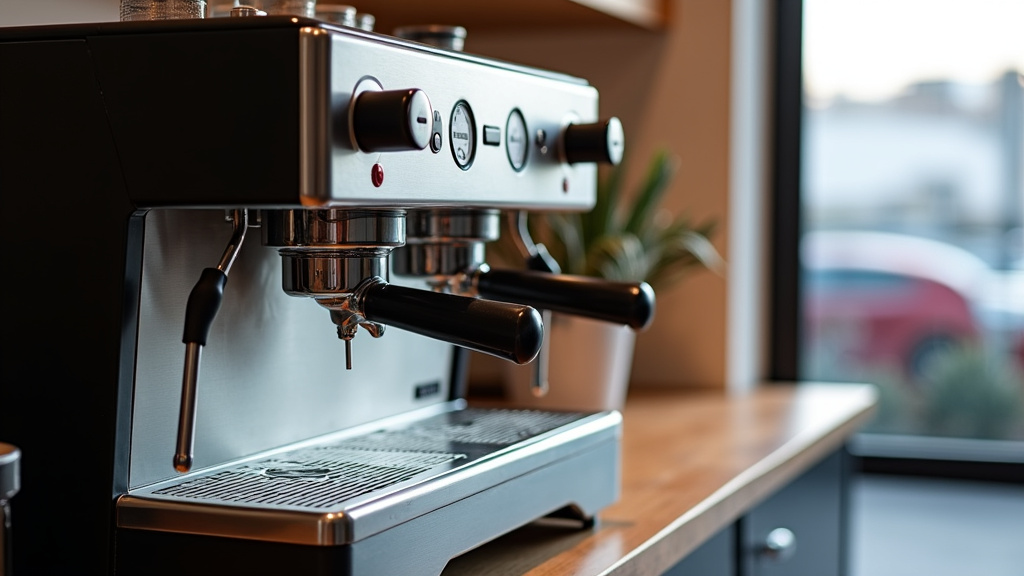
The group head is where you lock in the portafilter (the handle with coffee). Commercial group heads are usually heavier and more stable. They are designed to maintain a consistent temperature during brewing. Some have built-in heating elements to ensure this stability.
You’ll often find electronic controls on modern commercial machines. These allow baristas to program specific shot volumes. This leads to very predictable results.
Portafilters: The Coffee Holders
While they look similar to home versions, commercial portafilters are typically heavier and more durable. They are built to withstand frequent use. You’ll also find different sizes, with 58mm being a common standard in professional settings.
Why Are Commercial Espresso Machines So Different from Home Units?
It all comes down to purpose and volume. A home machine might make a few coffees a day. A commercial machine needs to make hundreds.
Durability and Build Quality
Commercial machines are built with heavy-duty materials. Think stainless steel and solid metal components. This allows them to handle the constant vibration and heat. They are designed to be repaired, not replaced.
Speed and Efficiency
When you have a line of customers, speed matters. Commercial machines can heat water quickly and dispense espresso shots in rapid succession. This is crucial for maintaining customer satisfaction.
Consistency
Every customer expects their latte or americano to taste the same. Commercial machines offer precise temperature and pressure control. This ensures that each shot of espresso is brewed perfectly, every single time.
Capacity and Power
These machines have more powerful heating elements and larger water reservoirs (or direct plumbing). They are built to draw more power to meet demand. This means they can keep up with a busy cafe.
Types of Commercial Espresso Machines
You’ll see a few main categories of commercial espresso machines in the wild.
Semi-Automatic Machines
These are the most common type. The barista starts and stops the espresso shot manually. They control the brew time. This gives a skilled barista a lot of control over the final taste.
Automatic Machines
Automatic machines have pre-programmed shot volumes. You press a button, and the machine dispenses a set amount of espresso. This offers even more consistency, especially with newer staff.
Super-Automatic Machines
These are the most automated. They can grind beans, tamp coffee, brew espresso, and even froth milk with the touch of a button. They are convenient but offer less control for the barista.
Manual Lever Machines
These are less common now but have a classic charm. The barista uses a hand lever to create the pressure needed for brewing. They offer a unique experience and a hands-on approach to coffee making.
Key Features to Look For
When you’re looking at commercial machines, keep these features in mind. They’ll help you understand what you’re getting.
| Feature | What It Means for You | Why It Matters |
|---|---|---|
| Boiler Size | How much hot water the machine can store. | Larger boilers handle more drinks without losing heat. |
| Number of Group Heads | How many portafilters can be used at once. | More group heads mean faster service during busy times. |
| Steam Wand Power | How quickly the machine can heat and steam milk. | Powerful wands make frothing milk much faster. |
| Water Source | Does it have a tank or connect to plumbing? | Plumbed-in machines are more convenient and don’t run out of water. |
| Temperature Stability | How well the machine holds its set temperature. | Stable temps mean consistently great-tasting espresso. |
A Quick Checklist for Evaluating Commercial Espresso Machines
Thinking about what makes a machine a good fit? Run through this quick checklist.
- Does it have enough power for your expected volume?
- Is the build quality robust enough for daily use?
- Does it offer the right type of controls for your staff?
- Can it produce both espresso and steamed milk quickly?
- Is it easy to clean and maintain?
- Does it fit within your budget and space constraints?
Conclusion
A commercial espresso machine is clearly more than just a coffee maker; it’s the heart of a bustling coffee business. You’ve learned that its robust design, powerful components like boilers and pumps, and focus on speed and consistency set it apart from home models. Whether it’s semi-automatic, automatic, or super-automatic, the right machine handles high volume while maintaining quality. Consider your specific needs and the demands of your customers carefully. Your next step is to identify which type and features best align with your operational goals.
Frequently Asked Questions
How much more expensive are commercial espresso machines than home models?
Commercial espresso machines are significantly more expensive due to their heavy-duty construction, powerful components, and higher capacity. While home machines can range from a few hundred to a couple of thousand dollars, commercial units often start in the thousands and can go much higher, reflecting their commercial-grade durability and performance.
Can I use a commercial espresso machine at home?
You certainly can, but it’s often overkill for typical home use. Commercial machines require more power, space, and can be more complex to operate and maintain. If you’re a serious hobbyist or entertain frequently, it might be an option, but for most, a high-quality home machine is more practical.
How often do commercial espresso machines need maintenance?
Daily cleaning is essential for basic hygiene and performance. Beyond that, commercial machines typically require professional servicing every 6-12 months, depending on usage volume and the manufacturer’s recommendations. This includes descaling, checking seals, and calibrating pressure and temperature.
What is the difference between a heat exchanger and a dual boiler system?
A heat exchanger uses one boiler with a pipe running through it to heat water for brewing while also producing steam. A dual boiler system has two separate boilers: one dedicated to brewing espresso at a stable temperature and another for generating steam, offering better temperature control and faster steaming.
Are super-automatic commercial machines good for specialty coffee shops?
Super-automatic machines offer convenience and consistency, making them great for high-volume locations or where staff training is limited. However, specialty coffee shops focused on nuanced flavor profiles and barista artistry often prefer semi-automatic or automatic machines, which allow for more manual control over the brewing process.