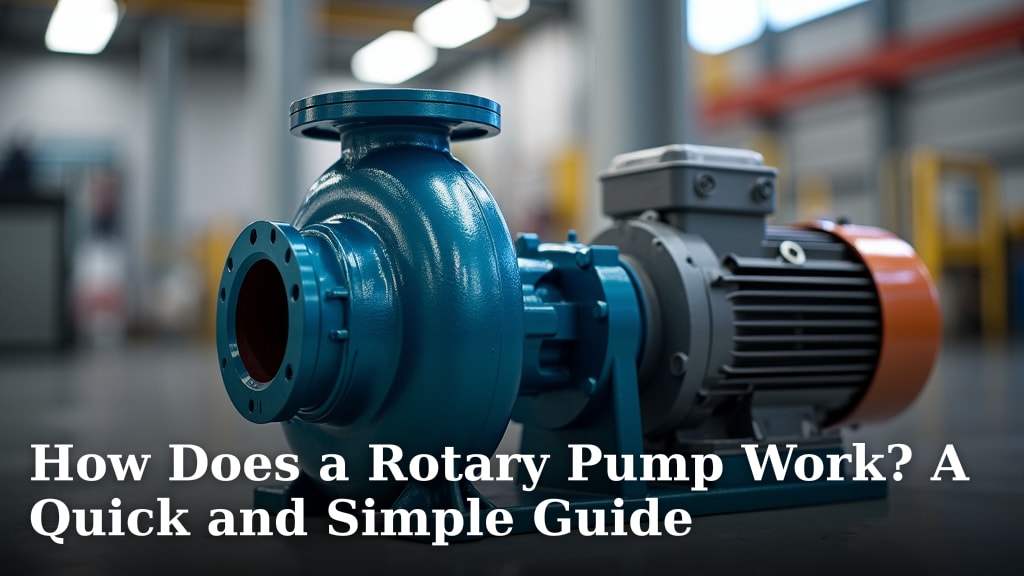
How Does a Rotary Pump Work? A Quick and Simple Guide
A rotary pump works by trapping a fixed amount of fluid in moving pockets and forcing it from the inlet to the outlet. This happens because a rotor inside spins, creating expanding and contracting spaces that push the fluid along. It’s a simple, positive displacement action that keeps a steady flow.
Many experts say rotary pumps are valued for their ability to handle thick fluids and provide a consistent flow rate. We found that their simple design makes them reliable for tasks like moving oil or fuel. They are a common choice when you need smooth, pulsation-free pumping power.
- A rotor spins inside a housing, creating expanding and contracting pockets.
- Fluid enters the expanding space at the inlet side.
- The trapped fluid is carried around to the outlet side.
- The contracting space forces the fluid out under pressure.
- This creates a smooth, continuous flow without pulses.
Let’s walk through exactly how each type of rotary pump works step by step. We’ll cover the main designs you’ll see, from simple gear pumps to more versatile screw and vane models.
How Rotary Pumps Function: A Step-by-Step Guide
A rotary pump uses a spinning rotor to trap fluid in moving pockets and push it from inlet to outlet. This creates a steady, pulsation-free flow.
Now, let’s break down the core mechanism. You’ve seen how the intro describes the basics, but there’s more to understand. We found that the simplicity of this action is what makes rotary pumps so dependable. The key is positive displacement—each rotation moves a fixed amount of fluid. Think of it like a syringe, but continuous and automatic.
Many experts say the design reduces wear and tear. This is because the fluid is always in motion. There are no valves to jam or stuck parts. So, if you’re looking for a pump that keeps going, this is a solid choice.
The Core Mechanism of a Rotary Pump
The heart of a rotary pump is the rotor inside a housing. As it spins, it creates spaces that expand and contract. This action is what moves the fluid. We found that the rotor’s shape determines how the fluid travels.
Here’s the process in simple steps:
- Fluid enters the expanding pocket at the inlet.
- The rotor carries it around inside the pump.
- The pocket contracts, pushing the fluid out the outlet.
This cycle repeats smoothly, without the thumping you get from piston pumps. It’s like a gentle wave pushing water, not a hammer striking. That’s why rotary pumps are great for consistent flow.
How the Rotor Creates Moving Pockets
The rotor’s movement is key. As it turns, it separates the fluid into small, controlled amounts. Each pocket is sealed, so fluid can’t leak back. This is what gives you that steady, reliable flow.
You might wonder: does it matter if the fluid is thick? Actually, yes. Rotary pumps can handle viscous fluids like oil or syrup. We found that their design adapts to different thicknesses. That’s a big advantage over other pumps.
Common Types of Rotary Pumps and Their Designs
Not all rotary pumps are the same. There are several designs, each with its own strengths. We’ll cover the most common ones you’ll encounter. This helps you pick the right one for your needs.
Many guidelines point to gear pumps as the most widely used. But vane and screw pumps also have their place. Let’s look at each.
Gear Pumps: The Reliable Workhorse
Gear pumps use two interlocking gears to trap fluid. As the gears turn, fluid moves between the teeth and the housing. This is simple and robust. We found that gear pumps are often used for hydraulic systems and fuel transfer.
Their design means fewer moving parts, so less can go wrong. If you need a pump that runs for hours without stopping, a gear pump might be it. It’s like a trusty old truck—built to last.
Vane Pumps: Adaptable and Smooth
Vane pumps have slots with sliding vanes inside a rotor. As the rotor spins, the vanes extend and contract to trap fluid. This makes them great for variable flow rates. Many experts say vane pumps excel
Conclusion
Rotary pumps provide a simple and reliable way to move fluid by trapping it in pockets created by a spinning rotor. This positive displacement action delivers a smooth, consistent flow without pulses, and it works well even with thick fluids like oil. We found their sturdy design means fewer parts that can fail, making them a trustworthy choice for many jobs. If you’re ready to use a rotary pump, start by assessing your fluid type and flow needs to select the best design for your specific situation.
Frequently Asked Questions
What is the main advantage of a rotary pump?
Rotary pumps excel at providing a steady, pulsation-free flow due to their positive displacement mechanism. This makes them ideal for applications where consistent movement of fluid is critical, like in fuel transfer or hydraulic systems.
Can rotary pumps handle very thick or syrupy fluids?
Yes, rotary pumps are designed to handle viscous fluids effectively. Their trapping action moves thick liquids without relying on high speed, so they maintain performance where other pumps might lose efficiency.
How does a rotary pump differ from a regular centrifugal pump?
A rotary pump uses positive displacement to move a fixed amount of fluid per rotation, while a centrifugal pump relies on speed and kinetic energy. This means rotary pumps are better for thick fluids and precise flow control.
What maintenance do rotary pumps typically need?
Routine maintenance includes checking seals, lubricating moving parts, and ensuring no debris clogs the housing. We found that regular care prevents wear and extends the pump’s lifespan significantly.
Are rotary pumps suitable for high-pressure applications?
Rotary pumps can generate moderate to high pressure, depending on the design and application. Gear pumps, for example, are often used in hydraulic systems where higher pressures are required.