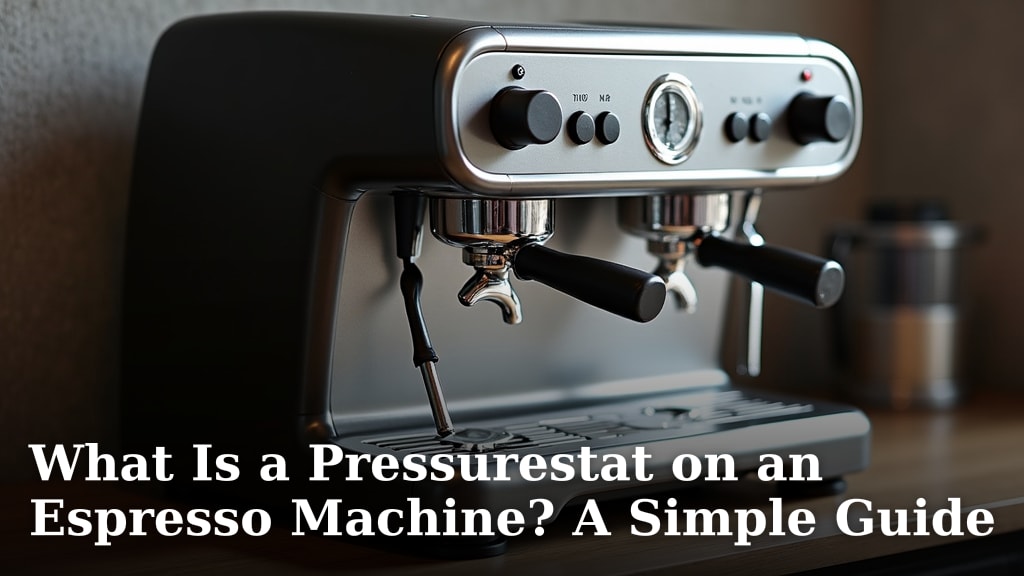
What Is a Pressurestat on an Espresso Machine? A Simple Guide
A pressurestat on an espresso machine is a thermostat that controls the boiler’s temperature by managing steam pressure. It’s a vital component that helps ensure your espresso machine delivers consistent, delicious shots by maintaining the correct brewing temperature and pressure. Think of it as the machine’s temperature guardian.
When the pressure inside your boiler reaches a certain point, the pressurestat cuts power to the heating element. As the pressure drops, it signals the element to turn back on. This on-and-off cycle keeps your water at the ideal temperature for brewing perfect espresso, preventing your machine from overheating or getting too cool. Many experts say this simple mechanism is key to stable brewing.
- A pressurestat is a device that controls boiler pressure and temperature.
- It works by switching the heating element on and off.
- This keeps your espresso machine’s water at the correct brewing temperature.
- It’s essential for consistent espresso shots.
Let’s take a closer look at what a pressurestat is and how it helps you make amazing coffee at home. Let’s take a closer look at what a pressurestat is and how it helps you make amazing coffee at home, particularly with a heat exchanger espresso machine.
Understanding Your Espresso Machine’s Pressurestat
You might be wondering what that little gizmo inside your espresso machine actually does. It’s called a pressurestat, and it’s a simple yet brilliant part. Think of it as the thermostat for your machine’s boiler, but instead of measuring temperature directly, it measures steam pressure. This pressure is directly related to the water temperature inside the boiler.
When the steam pressure builds up to a set level, the pressurestat trips a switch. This switch cuts power to the heating element. That means no more heating, and the pressure (and temperature) will start to slowly decrease. Once the pressure drops below a certain point, the switch flips back, turning the heating element on again. This on-and-off cycle keeps your boiler water within a consistent temperature range.
Why Boiler Temperature Matters for Espresso
Espresso brewing is a delicate science. The water temperature needs to be just right. Too cool, and your espresso will taste sour and weak. Too hot, and it will taste burnt and bitter. We’re talking about a narrow window, often around 195-205°F (90-96°C) for the water. The pressurestat is your machine’s primary tool for keeping the water in that sweet spot.
Without a reliable pressurestat, your machine’s temperature would swing wildly. You’d get inconsistent shots. One shot might be underdeveloped, while the next is over-extracted. Nobody wants that when they’re just trying to get their morning caffeine fix!
The Role of Steam Pressure
Water boils at different temperatures depending on the pressure it’s under. At sea level, water boils at 212°F (100°C). But if you increase the pressure, the boiling point goes up. Espresso machines use this principle. By keeping the boiler under pressure, they can heat the water to temperatures higher than boiling. This allows for efficient extraction of coffee flavors.
The pressurestat is set to a specific pressure level. When the steam inside the boiler reaches that target pressure, it signals the pressurestat to act. This pressure level corresponds to the desired brewing temperature. It’s a clever way to control water temperature indirectly.
How Does a Pressurestat Work?
At its core, a pressurestat is an electromechanical switch. It has a diaphragm that is exposed to the steam pressure inside the boiler. This diaphragm is connected to a lever or mechanism that operates electrical contacts. When the pressure pushes against the diaphragm, it moves the lever to open the electrical contacts, cutting power.
As the steam pressure drops, the diaphragm relaxes. This allows a spring mechanism to push the lever back. The lever then closes the electrical contacts, restoring power to the heating element. It’s a simple feedback loop designed to maintain a target pressure.
Key Components of a Pressurestat
While designs can vary slightly, most pressurestats have a few key parts:
- Diaphragm: A flexible membrane that senses the steam pressure.
- Lever Arm: Connects the diaphragm to the electrical contacts.
- Electrical Contacts: The “switch” that turns the heating element on and off.
- Spring: Provides tension to reset the lever and close the contacts when pressure drops.
- Adjustment Screw: Allows you to change the pressure (and thus temperature) setting.
Many experienced baristas and technicians find that the adjustment screw is the most important part for fine-tuning your machine’s performance. It allows you to dial in the exact temperature you prefer for your coffee. You’ll often see this adjustment done when calibrating a machine.
Setting the Pressurestat (Temperature)
Adjusting your pressurestat is how you can fine-tune your machine’s brewing temperature. This is usually done by turning a small screw on the pressurestat itself. Turning the screw one way increases the spring tension, meaning the diaphragm needs more pressure to open the switch. This results in a higher operating pressure and thus a higher brewing temperature.
Turning the screw the other way loosens the spring tension. The switch will open at a lower pressure, leading to a lower brewing temperature. It’s essential to make these adjustments gradually. You might want to monitor the boiler temperature with a thermometer if possible, or simply adjust based on the taste of your espresso.
Many sources suggest that for most home espresso machines, the target pressure is around 0.8 to 1.2 bar. This typically translates to the ideal brewing temperatures we discussed earlier (many experts agree on this range – NCBI). Always refer to your machine’s manual before attempting any adjustments.
Common Pressurestat Settings
Different machines and even different types of coffee may benefit from slightly different pressure settings. Here’s a general idea:
- Lower Pressure (e.g., 0.8 bar): Often preferred for lighter roasts. This can help preserve delicate acidity and aromatics.
- Medium Pressure (e.g., 1.0 bar): A good all-around setting that works well for medium roasts. It provides a balanced extraction.
- Higher Pressure (e.g., 1.2 bar): Can be beneficial for darker roasts. It might help to mute some of the inherent bitterness in darker beans.
It’s important to remember that these are starting points. Your specific machine, grinder, and coffee beans will all play a role in achieving the perfect shot. Experimentation is key!
Pressurestat vs. PID: What’s the Difference?
If you’ve looked into espresso machines, you might have heard of PID controllers. These are often seen as a more advanced way to control temperature. How does a pressurestat compare?
A pressurestat is a simpler, electromechanical device. It relies on mechanical parts and the direct measurement of steam pressure. Its on-off cycling means the temperature can fluctuate a bit between cycles. This is often referred to as “temperature surfing,” where you might need to wait for the temperature to stabilize before pulling a shot.
A PID (Proportional-Integral-Derivative) controller is an electronic system. It uses a digital thermometer to precisely measure the water temperature in the boiler. It then uses a sophisticated algorithm to control the heating element. Instead of just turning the heat fully on or off, a PID can apply heat in varying amounts. This results in much tighter temperature stability.
| Feature | Pressurestat | PID Controller |
|---|---|---|
| Type of Control | Electromechanical (On/Off) | Electronic (Proportional) |
| Temperature Stability | Good, but with some fluctuation | Excellent, very tight control |
| Complexity | Simple | More complex electronics |
| Common in | Most entry-level and mid-range machines | Prosumer and commercial machines |
| Adjustment | Mechanical screw | Digital interface |
While a PID offers superior temperature control, a well-calibrated pressurestat can still produce fantastic espresso. Many home baristas learn to “work with” their pressurestat machine by understanding its temperature cycles.
When Might You Need to Service Your Pressurestat?
Pressurestats are generally reliable, but like any mechanical part, they can wear out or go out of adjustment. Signs that your pressurestat might need attention include:
- Inconsistent shot temperatures: Espresso that is suddenly too hot or too cold shot after shot.
- Machine not heating up: If the pressurestat is stuck in the “off” position, the heating element may not turn on at all.
- Excessive steam: If the pressurestat isn’t cutting power, the boiler might over-pressurize, leading to lots of steam.
- Strange noises: Some pressurestats can become noisy as they age or when they are beginning to fail.
If you suspect an issue with your pressurestat, it’s often best to consult your machine’s manual or contact a qualified espresso machine technician. Adjusting or replacing a pressurestat involves working with electrical components and steam pressure, so safety is important (CDC recommends caution with high pressure and electrical systems).
A Quick Checklist for Your Pressurestat
To make sure your pressurestat is doing its job, consider these points:
- Understand its function: You now know it controls boiler pressure and, by extension, temperature.
- Monitor your shots: Does the taste change drastically from one shot to the next?
- Listen to your machine: Are there unusual noises when it’s heating?
- Check for consistency: Are your shots pulling predictably each time?
- Know your settings: If you’ve adjusted it, are you happy with the results?
- Consult your manual: Always the best first step for machine-specific advice.
Conclusion
You’ve learned that your espresso machine’s pressurestat is the trusty guardian of your brew temperature. By cleverly managing steam pressure, it ensures your water stays in that sweet spot for delicious espresso, shot after shot. While simpler than a PID, a well-functioning pressurestat is key to consistent results. Now that you understand how it works, you can better appreciate your machine’s performance and even make small adjustments if needed. Your next step? Pay attention to your machine’s heating cycle and enjoy dialing in your perfect espresso!
Frequently Asked Questions
Will a dirty pressurestat affect my espresso?
Yes, a dirty or worn pressurestat can lead to inconsistent brewing temperatures. If mineral buildup or wear occurs, it might not accurately sense the pressure. This can result in your machine overheating or not reaching the correct temperature, impacting your espresso’s taste.
Can I adjust my pressurestat myself?
Many home espresso machines allow for pressurestat adjustment via a small screw. However, it’s crucial to consult your machine’s manual first. Making incorrect adjustments can lead to temperature instability or even damage your machine. Proceed with caution and make small, incremental changes.
How often should I service my pressurestat?
Pressurestats are generally reliable and don’t require frequent servicing. However, if you notice consistent issues with shot temperature, it might be time for a check. Annual descaling can help prevent mineral buildup that might affect its performance over time.
Is a pressurestat bad for making espresso?
No, a pressurestat is not inherently bad. It’s a tried-and-true method for temperature control found in many reliable espresso machines. While a PID offers tighter control, many excellent espresso shots are brewed using pressurestats. Your ability to “dial in” your grind and technique is also vital.
What happens if my pressurestat fails completely?
If your pressurestat fails, your machine’s heating element might stay on constantly, causing the boiler to over-pressurize and overheat. Alternatively, it might get stuck in the “off” position, preventing the machine from heating up at all. Both scenarios require immediate attention for safety and machine longevity.